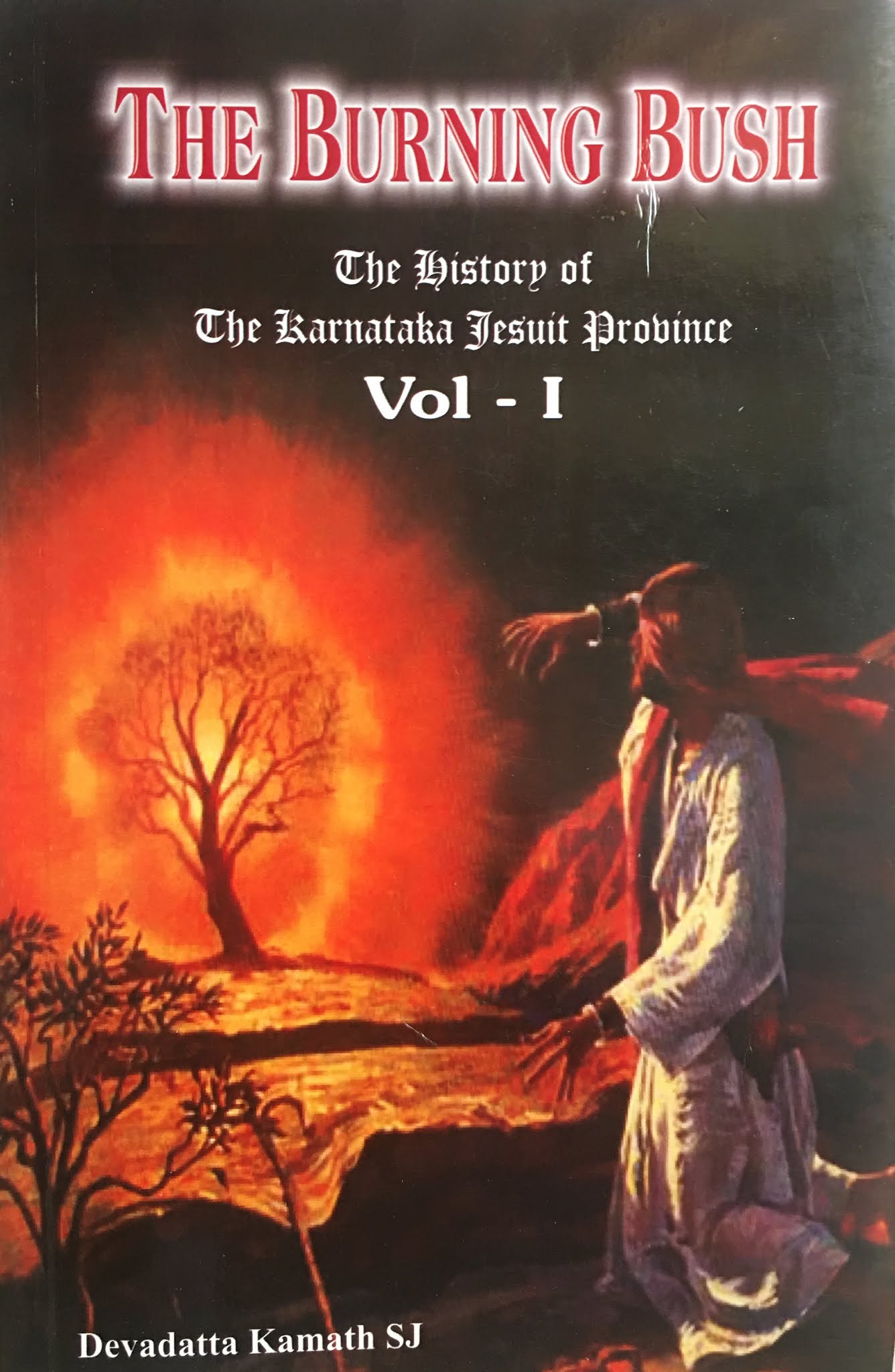
"History is a storehouse of human experience and as such an irreplaceable educator. For sure knowledge of the past lets us draw upon earlier human experience, facilitating our leap into the future with a sense of ease and confidence." Fr Vijay Kumar Prabhu, SJ in"The Burning Bush: The History of Karnataka Jesuit Province"by Fr Devadatta Kamath, SJ

Showing posts sorted by relevance for query maffei. Sort by date Show all posts

Tuesday, June 15, 2021

FR ANGELO F. X. MAFFEI, S.J.(1844-1899)

Fr Angelo F.X. Maffei, SJ

Reading through the source material on the life of Fr Angelo. Francis Xavier Maffei, one comes across again and again the remark that he was a saint and a scholar. We have but to add the third 'S' and we have the full picture of Father Maffei. In good old days a Jesuit confessor or spiritual father used to advise his spiritual confreres to ask for three 'S's to make them good Jesuits: sanctitas, scientia, sanitas (sanctity, knowledge and health) and Fr Maffei had all the three abundantly. One of the first nine Jesuits who arrived in Mangalore in 1878, he kept aloft the torch of intellectual flame bright and clear.

He had 'Sanitas'. Fr Maffei was blessed with good health. Tall in stature and stern to look at, he made a fine impression as one enjoying robust health. And with God's grace he made ample use of it in his strenuous and ceaseless work as a scholar and missionary. Only persons who enjoyed health could have stood the austerities he practised and borne the hardships he bore. No one, except those gifted with strong physical health, could have put in such an amount of work as a scholar, an administrator and a missionary.

From the time of his arrival on 31 December 1878 till his death on 31st May 1899, Fr Maffei's life was one of ceaseless activity for the salvation of souls. He was saturated with missionary zeal and ideal. On his first vows day he had joined the Society as a diocesan priest- he had taken the extra name of Francis Xavier. He lived up to that name almost blindly following Xavier's way and methods.

Sunday, June 20, 2021

Mission Activity in Karnataka

Mission activity in South Canara

Though the Mangaloreans had repeatedly asked for the Jesuits for the purpose of education, the Society of Jesus could not neglect missionary activity. Indeed, the Society has always considered it its primary apostolate.

The history of mission work in the Vice province is a page written in gold. By his heroic efforts Fr Francis Xavier Maffei in 1898 blazed the trail. Much earlier, from the very time he had landed in Mangalore with the first batch of Jesuits in 1878, Fr Maffei had taken up mission work by preaching missions and giving talks, moving from place to place for this purpose. Finally, he turned a full missionary and went all out to conquer souls by prayer, penance, and even severe austerities, till he died all alone in a hut at Nellikunja. He did not die in vain. The road for heroic efforts in missionary life had been laid. Fr F. Corti initiated mission work in Naravi and the surrounding areas. His adventures and exploits often reached the limit of human endurance. From 1904 to 1926 he spent himself in the service of the 'outcastes' to make them 'God's children' as he himself used to term them. It was not a work of just baptizing: it was work for social justice, service of humanity, philanthropy and charity all in one. He became one with the people, living with them and like them and stood by them too through thick and thin, He carried Christ's message, and began a splendid process of liberation of these people from serfdom, from bonded labour and from ignorance. He fought their battles in courts of law, too. He became the 'pariah guru' or the Naravi chieftain. Long before Mahatma Gandhi Frs Corti, Gaviraghi and Camisa had spotted out the Harijans as the oppressed ones and spent themselves in their service.

For 25 years Fr Angelo Gaviraghi moved on foot from place to place-Arva, Badyar, Belthangady and Madanthyar in search of outcastes and the poor. He is well remembered in these places. Subsisting he let his zeal take him across forests and on meagre and simple food, fields. Neither the hot sun nor his own bad health, -a virulent type of eczema was his constant companion-nor even opposition from vested interests deterred him from Christ's work.

Fr Alexander Camisa took up the work among the lowest of the outcastes, the 'Korgars', and became a white Korgar for Christ's sake. For more than thirty years, from 1920 to 1955, he worked for the Korgars, trying with secular and Christian education to raise their status in life. He introduced schools and handicrafts which helped them secure the means for a better living. All through it was a herculean task. For the benefit of his Korgars he even wrote the first Tulu catechism.

At Suratkal Fr Denis Coelho, the first Mangalorean Jesuit, worked as a missionary to gain the goodwill of the non-Christians in that area. For twenty years from 1898 to 1918, he strove to spread the knowledge of Christ. He had a practical bent of mind and sought to stabilize his work through schools, cooperative societies, the printed word and pictures. In fact, he started seven schools and secured from the Government many acres of land for his people.

Mention must be made also of Fr Antony Zearo who worked as a missionary all his years in India, first in South Kanara (Narol, Alankar...) and then in Wynad. He is in a way a link between the early and later missionaries.

The last of this noble band of missionaries brings us to the early years of the second half of the century, in fact to 1955.

With the shifting of the missionary activity to the Calicut region in 1923 the torch of zeal began to glow there, first in the hills of Wynad-at Meppady, Manantody, Vayittiri-and at Shoranur in the plains. Frs Lombardini, Sebastian Noronha and John Coelho patiently and painstakingly sought out souls in the estates and fields. Lonely was their life, unsung by human voices their work, but numberless were the souls they gained for heaven.

Soon, however, with the arrival of new young men, missionary activity shifted to the vast Pulaya areas. Fr Caironi with his restless zeal became the pioneer here and like Fr Maffei lit the torch. But unlike Fr Maffei, he was young and God granted him years of active life to move about far and wide, setting ablaze everything with his missionary torch. The Chirakkal Mission with its several substations covering a large area is the fruit of Fr Caironi's efforts. Frs Montanari, Del Zotto, Zucol, Zearo and Taffarel rivalled his exploits so that from 1950 the area was flourishing with missionary activity with chapels, dispensaries, hospitals, and Christian homes springing all over. Here too the missionaries were apostles of social justice, standing for the rights of the poor outcastes or the Pulayas. If a large number of the Pulayas today have emerged as respectable citizens, knowing their responsibilities and duties, the blessings are traceable to the tireless labours of the missionaries.

With the erection of the Karnataka Vice-province in 1955 missionary activity had to shift to the Karnataka State. In fact, Fr J. B. Janssens, the then Jesuit General, in his decree establishing Karnataka Vice-province had urged the starting of new mission stations in the territories of the various dioceses. The bishops too welcomed the proposal. Thus, a new era of missionary activity started with its concomitants like social work, education and social uplift. Between the years 1955 and 1975 no less than 25 priests laboured in more than 40 mission stations or sub-stations spread over the five dioceses of Bangalore, Mysore, Ooty, Bellary and Chikmagalur. Chief of these mission stations were Adigondanahalli, Basavanapura, Channa patna, Chikkakammanahalli, Kunigal, Sira, Soosaipalayam and Tiptur in the Diocese of Bangalore: Chamrajnagar, Gundlupet, Hunsur, Nagavalli, Prakashapalayam, Somwarpet and Sunticoppa in the Diocese of Mysore; Dasapura and Magge in the Diocese of Chikmagalur: Doddagajanur and Mudianur in the Diocese of Ooty: Gulbarga, Manvi, Munirabad, Sandur, Shahabad and Tungabhadra Dam in the Diocese of Bellary. The list is formidable. For 20 years, among many others, Frs Denis Alvares, John Aranha, Ambrose D'Mello, Patrick D'Mello, Denis D'Souza, Norbert D'Souza, Aloysius Farias, Andrew Lewis, Mathew Lewis, Cyprian Pai, Isidore Pinto, Thomas Pinto and John B. Prabhu have toiled in these areas with varying degrees of success. And what did they do in these places? Together with the knowledge of faith, they sought to give the people better conditions of material life houses of their own, plots to cultivate, job facilities and abilities with the know ledge of a craft. Chapels too rose, schools were opened, fields cultivated. In most cases when the situation improved, they handed over the station to diocesan authorities and moved on to new pastures.

Walking in the footsteps of their forebears the missionaries of our own day have striven and still strive, each in his own way, to spread the good news to the people of Karnataka, mainly in the Kannada-speaking areas. Given the times their approach must be different: direct evangelization, development, social emancipation and literacy programme have been some of their effective methods.

Of the recent missionaries, two have gone to their eternal reward: Fr Andrew Lewis and Fr Luigi Perego. The former did silent work for Christ in several places, first in the Kerala region and then in the diocese of Mysore. Fr Perego was a missionary all his priestly life. A staunch believer of direct evangelization, he practised it fearlessly in his musical Kannada. He put up a new Church at Basavanapura. He slogged for the people successfully and paid for his success dearly: he lost his health, his eyesight and finally died in Italy far from the land of his dreams-like Xavier, the patron of the Chikkakammanahalli parish where he laboured last in India. He was a real firebrand for Christ's sake.

Speaking of new churches, special mention must be made of the beautiful church on a hilltop at Somwarpet, erected by Fr John B. Prabhu, and of the splendid church of Gulbarga in the Muslim style of architecture and a true mark of inculturation-the labour of love of Fr C.C. A. Pai. Add to these the spacious church at Adigondanahalli built by Fr Denis Alvares and completed by Fr Thomas Pinto.

Not all might have put up new churches, but all have been earnestly engaged in the task of building the temple of God in the hearts of the people.

Fr Cyril V. Silva, stationed at present at T. B. Dam in Bellary Diocese, is the only one of our missionaries at present in the diaspora, while all others are working in one or the other of the two regions entrusted to the Karnataka Jesuits as the fields of their evangelization work Anekal area in the Bangalore Archdiocese and Kohima and the Chakhesang area in Nagaland.

In connection with the missionary activity of the Vice province it is with legitimate pride in Christ we mention our missionaries going West to Africa to help in the evangelization of that continent. In 1960 Fr William Picardo with Fr Mathew Lewis formed the vanguard. They took up work in the Mwanza Mission catechizing, teaching in schools, contacting youth, besides doing regular parish work. Though for reasons of health Fr Mathew Lewis returned to India, Fr Picardo continued his fruitful work for eighteen years. He was joined by Fr Aloysius D'Souza in 1963 and by Fr Stany Mascarenhas in 1971. Other Jesuits from other Provinces in India joined them so that today the Jesuits in East Africa form a Region of the Society of Jesus which extends from the Sudan to Tanzania.

- Taken from the Karnataka Jesuit Centenary, Souvenir, 1878-1978

Tuesday, June 15, 2021

FR DENIS COELHO (1861-1918)

Fr Denis Coelho, SJ

Among the Mangaloreans who joined the Society of Jesus in the very first years of the opening of the Novitiate 1883, we find two, of whom it could have been asked: What good could they do? What work could they turn out? "Sickly, thin, austere in face, they lived most of their life on liquid diet. And yet both were remarkable for the amount of work they did for more than twenty-five years as priests". One of these was Fr Denis Coelho, the first Mangalorean to join the Jesuit Novitiate, and the other Fr Gregory Coelho.

As a parishioner of Milagres in his boyhood days, Fr Denis was prominent in all church activities. Here is what a writer of the time notes: "We must not fail to mention two names in connection with the celebration at Milagres of the feast of St Aloysius. They took the greatest interest in the solemnity. St Aloysius has amply rewarded them for their labour of love. Fr Denis Coelho joined the Society of Jesus in which he died a holy death, after a long and arduous career of apostolic labours. And Mr. Pedru Saldanha led a very exemplary life in the world always first and foremost in works of charity and zeal". After his high school studies Fr Denis joined the Jesuit Novitiate at Jeppu on 6th January, 1883.

In their fifth year in Mangalore, the Jesuits formally opened a Jesuit Novitiate at the Seminary itself. And Fr Denis was the first to step in. Five others followed him that very year and a regular novitiate was in the making by the end of the year with Fr Zanetti as Novice Master. It is for the historian of the province to detail the opening and closing of the Mangalore Jesuit Novitiate. Suffice it to note here that fourteen Jesuits had their novitiate at Jeppu, before it was closed in 1895. At this distance of time, it is difficult to know the real reasons that led to its closing down. Was the policy changed? Was it due to severity in admissions as only one was admitted between the years 1887 and 1895? Whatever the human factors which may have played their part in the closure of the Novitiate at the direction of Fr General, from 1892 the novices went to Shembaganur for their novitiate, till once again a novitiate was opened in the province, at Calicut in 1933.

We have not with us the diary the Novitiate but only of the Juniorate. And it is in good old Latin. But we have the book in which the First Vows taken by the novices were noted. Fr Denis Coelho is the third in the list. He took his first vows on 6th January, 1895. Next day he began his scholastic studies in the Juniorate at the Seminary itself. The present long low building of the orphanage was the study hall for rhetoric, philosophy, and moral theology. After his philosophy Fr Denis studied his F. A., while doing at the same time some supervising work at the St Aloysius College. A year of regency in the Seminary was followed by theological studies. On December 2nd, 1894, he was ordained priest in the Seminary chapel. He had his first experience as a priest at the Catechumenate attached to the St Joseph's Asylum Industrial Works. In 1896 he went to Ranchi for his tertianship and on his return in 1897 took his last vows on 15th August. Now at last he was ready for his priestly apostolate.

When a scholastic, Denis had several times expressed a desire to devote himself to the conversion of non-Christians. After his ordination, he renewed his request but the superiors had to turn it down for reasons of health. Fr Denis writes in one of his many letters: "While encouraging me, my superior (Fr Cavadini) expressed his fears on account of my health which was very poor. At that time on account of my weak chest and bad throat it was difficult for me to preach or to teach and after my last vows, for several months I was entirely forbidden by the doctor to preach, teach or even to hear confessions." In another letter, he notes that he had to admit to his superiors that, for many years, he had to live on liquid food, and that he has some heart trouble too.

But zeal knows no barriers; it overcomes all obstacles. For twenty years Fr Denis had to fight his bad health, the ill will and opposition of his enemies and overcome the reluctance and even opposition of his ecclesiastical superiors to satisfy his zeal for souls. He persevered in his request to be sent for the conversion of non-Christians and finally obtained his wish. Hearing of the death of Fr Maffei, he wrote and even personally requested the Bishop to be allowed to take the place of Fr Maffei. The Bishop yielded and decided to send him provisionally, not to the lonely place of Fr Maffei at Nellikunja, but to Bajpe as an assistant to Fr Balthasar Aranha. Thus began the missionary activity of Fr Denis. From here he began to visit the neighbouring places. Seeing his zeal, Fr Aranha suggested to him that he could visit Suratkal and do some work there among the non-Christians. Fr Baretto, the Vicar Forane, helped him in his new venture and offered to build a small residence at Suratkal.

Thus began the great work of Fr Denis at Suratkal with its ups and downs. He was specifically sent there to work among the non-Christians and had no jurisdiction over the Christians. He had his heart’s desire, but he was to experience afterwards that the division was not for the good of any party, but a source of scandal and trouble. With his mind full of plans and ever planning, Fr Denis went all out to better the spiritual and material lot of the non-Christians and converts who were his charge. In January, 1901, he took charge of the new residence and in February of the same year the church and presbytery were blessed.

Then came the first hurdle. The strain of work must have been too much for Fr Denis. His health which was always poor, failed him and he was called to the Seminary to look after the Catechumenate. Fr Denis took the transfer in his stride and it turned out to be a blessing, as later on he could send his new converts and would-be converts for instruction or treatment to the Catechumenate. It was all for the good, as one writer observes: The immense good in the Catechumenate in the first half of the centenary was made possible by the combination of charitable, social and apostolic work started by its founder, Fr Diamanti and collaborator Fr Denis. "But Fr Denis Coelho persevered in his efforts to return to the mission field. Once again, the superiors yielded to his importunate requests and after seven months of absence, he was again back at Suratkal.

For seventeen years Suratkal became his field of mission activity. Amiable, kind and charitable by nature, he attracted a number of non-Christians. They came to see his church, to see him and even to discuss religious subjects. Fr Denis wrote at this time: "I have begun to go round to neighbouring places and to speak kindly to all the people, letting them know that I had been sent by my superiors especially for the good of non-Christians. At first, I spoke in a general way but as acquaintance increased, I began to speak directly and explicitly about religion". Through paintings and pictures, he made the teaching of religion attractive. He was particularly kind to children, and the small presents he gave to them won the goodwill and esteem of the parents. The author of 'In Memoriam' writing on Fr Denis remarks that "pity gave before charity began". But it was a pity and charity of a zealous missionary seeking out souls everywhere. He seemed to fulfil in himself St Paul's definition of a priest Ordained for men in the things of God".

Fr Denis lived for others unmindful of himself and made himself "all things to all men", making use of all things to turn the hearts and minds of men towards God. His love for the poor and in particular the sick, his deep interest in their daily life and all that concerned their welfare, won for him the hearts of all. He regularly visited the sick, helped the dying and often helped them materially too. This interest in the welfare of the people, both Christian and non-Christian won the respect, appreciation and affection of all. The people were quick to see that the priest was for them. And Fr Denis was quick to make capital out of this attitude of the people. He sought to break down the prejudice of the non-Christians by freely mixing with them, by allowing them to attend the services in the church, by organizing public feasts on a grand scale in the open. The Hindus came willingly but somehow would not seek for baptism. They admitted the truths of the Catholic religion but refused to leave the religion in which they were born. 2

The Bombay Synod of 1893 had stressed the need of being mindful of material welfare of the people when doing missionary work. In his boundless sympathy and charity towards the poor and ignorant, Fr Denis took up the suggestion earnestly. He was not satisfied with individual help doled out as needed, but sought to put the material welfare of his people on a more social and stable foundation. He started a cooperative Society at Suratkal. With the same end in view, he instituted a congregation under the patronage of St Francis Xavier to help new converts materially and spiritually.

But the most effective work for the uplift of the people was in the field of education. Again, his authority was the Bombay Synod which had strongly recommended the opening of schools to dissipate ignorance. With the full support of his Christians, but in the face of great difficulties especially from the Brahmins, he opened his first school in 1903 without government aid. This first school was followed by five other schools. Thus Fr Denis awakened in the people of Suratkal a taste for learning. Further, with a view to make the converts materially self-supporting and self-reliant, he obtained land from the Government, built houses for them and taught them to cultivate their small plots to meet their common daily requirements of vegetable and farm products.

In the execution of all these works opposition was not wanting, and we must sadly note, opposition was not wanting from ecclesiastical authorities too. Fr Denis had to bear false reports, misunderstandings, apathy and want of encouragement, God seems to have demanded from him all sense of self-esteem, self-achievement and satisfaction. Poor in health, poor in the estimation of his superiors, he had to leave Suratkal with a sense of failure. We can well imagine his pain when in June, 1917, Suratkal ceased to be a mission station and became a parish for the convenience of the old Christians who were not quite reconciled to the idea of having to mix with converts.

Fr Denis bowed to obedience and even undertook to build the parish church and laid the foundations for it. But before the basement was completed, he was transferred to the Seminary. He obeyed once again and handing over to his successor all the material and money he had collected from his many benefactors, he left for the Seminary. We find this note in an old document: "Bishop Perini may have thought that the difficulties of Fr Denis were due to mismanagement of his six schools. So, he had appointed a successor to him who was well experienced in the management of schools". But the first act of his successor was to close down four of the six schools. Only the Sacred Heart and the Holy Infant Schools were kept. Not long after the next Parish Priest handed over the Holy Infant School to a Hindu, and we learn from records, this is the present Suratkal Board School.

Fr Denis had to be a silent spectator of his work of years crumbling. What was worse, the converts seem to have left the place, abandoning the houses which Fr Denis had built for them on the land he had obtained from the Government. The land reverted to the Government. Fr Denis Coelho's suggestions, requests and appeals had almost the opposite effect. So now he would not speak. The impression that he had gathered from his superiors was that his mission at Suratkal was not a success, quench his zeal for souls. But even this failure was not to When once again he got orders of transfer to go as an assistant to Fr Corti at Naravi, he willingly obeyed and lost no time to pack his few things and to send them ahead. But he was not destined to reach Naravi. His battle had been fought. He bowed to God's will and went to his eternal reward. He had never allowed his work to suffer on account of his weak health and his death was not due to any of his many infirmities. He fell a victim to the Spanish influenza that was sweeping across India, after the First World War. Following a few days of high fever he quietly died at Fr Muller's Hospital, Kankanady. It was the 23rd of October, 1918. Fr Denis was fifty-seven and had been a religious for thirty-five years.

This above material is taken from the book "Restless for Christ - Lives of Select Jesuits who toiled in the Karnataka Province" Series - III

Saturday, June 12, 2021

Books Available from the Archives

 Books for distribution from the Jesuit Archives of Karnataka
The following books are available at the Provincialate of the Jesuits in Karnataka: Loyola Mandir, 96 Lavelle Road, 3rd Cross, Bengaluru - 560001.

Write to us at karjesuitarchives@gmail.com or send a message to this Mobile/WhatsApp number: 7899244060

The Burning Bush, Vol. I By Fr Devadatta Kamath, SJ 

It is a history of the Karnataka Jesuit Province since 1878 to 1955. These two volumes deal with life and work of Jesuits in Karnataka, a part of Kerala which once belonged to Mangalore mission as well as North East. It contains rich information on Jesuits, institutions, missions and the remarkable missionary endeavour that was carried out for more than 77 years.

 The Burning Bush, Vol. II By Fr Devadatta Kamath, SJ

It is a history of the Karnataka Jesuit Province since 1878 to 1955. These two volumes deal with life and work of Jesuits in Karnataka, a part of Kerala which once belonged to Mangalore mission as well as North East. It contains rich information on Jesuits, institutions, missions and the remarkable missionary endeavour that was carried out for more than 77 years.

ಮಾತನಾಡುವ ಸಮಾಧಿಗಳು by B. S Talwadi
A short history of the Mysore mission from 1648 to 1780. This book contains a vivid and passionate work of the Jesuit missionary toil and struggle for Christ before the suppression of the Society of Jesus. The location is in and around Mysore and some parts of Tamil Nadu. A well crafted historical work just as the title suggests, the graves of these great men of the Society still continue to speak today.

Kraista Bhakti Praveshike by Swami Supriya, SJ

A well-written introduction to a world of Christian devotion opens up various aspects of faith life in varied ways. This Kannada short book helps the reader to understand what that life is all about when one embraces Jesus as his/her Lord.

 Walk to Freedom by Fr Richard Sequeira, SJ

This book is a compilation of departed Jesuits who worked in the Karnataka Province from 1879 to 2019. They were good human beings, fervent religious and affectionate Jesuits. Even though they had humble origins it was the calling to follow Jesus that made a difference in their lives.

Pathways to Peace by Fr Bala Kiran Kumar, SJ
This book glans at various religions. It expounds the core teachings of each of the major religions with an emphasis on a hope for peaceful coexistence and inter-religious harmony. 
 
HARMONY:
Inter-faith Prayer Services for Various Occasions
By Father Ronnie Prabhu, SJ 


 ಪ್ರಕಟಣಾ ಗ್ರಂಥ by Fr Jerome D’Souza, SJ

This work is on the Book of Revelation deals with power, violence and suffering with a special emphasis on the voice of the voiceless.

ಹೊಸ ಒಡಂಬಡಿಕೆಗೆ ಪ್ರವೇಶ by Fr Jerome D’Souza, SJ 

It is an introduction to the New Testament with critical analyses in Kannada.

Down the Memory Lane by Fr Richard Sequeira, SJ 

A short biography of 47 Jesuits who lived, worked and died in Karnataka whose memories are still alive today. Even though, brief in the description, each short write up on these Jesuits speak about their ardent zeal for Christ and His Church, silent and yet profound way.                                                             

 Spiritual Exercises of St Ignatius of Loyola (Kannada Translation) By A. Edwin D'Souza

A Companion to the Spiritual Exercises of Saint Ignatius by Aloysius Ambruzzi, SJ 

This book contains the commentary on the Exercises of St Ignatius complemented with meditations and contemplations assigned by the saint to the four weeks into which they are divided.

The Spiritual Exercises of St Ignatius with Commentary by Fr Aloysius Ambruzzi, SJ
This work is the translation of the Spiritual Exercises of St Ignatius of Loyola into English. 
Imitation of Christ of Thomas A Kempis (Kannada Translation) By Prashanth Valerian Madtha, SJ 
Saints and Blessed of the Society of Jesus by Aloysius Ambruzzi, SJ
 Containing short bibliographies of the Jesuit saints and blessed arranged according to their feast days in the liturgical calendar including three prayers which are said during the Mass.
A Life Journey of ups and downs by Fr Jivan Prabhu, SJ. (in Kannada)

In 12 chapters, the author presents the fascinating life journey of the Servant of God Pedro Arrupe, the 28th Superior General of the Society of Jesus/Jesuits. Fr Arrupe not only read the signs of the times but also took decisive measures to respond to them effectively guiding a Jesuit Order during whose leadership the number went up to 36,000. God gave to the world a humble leader whose personal spiritual journey is immensely captivating and inspiring to the generations of today and tomorrow.

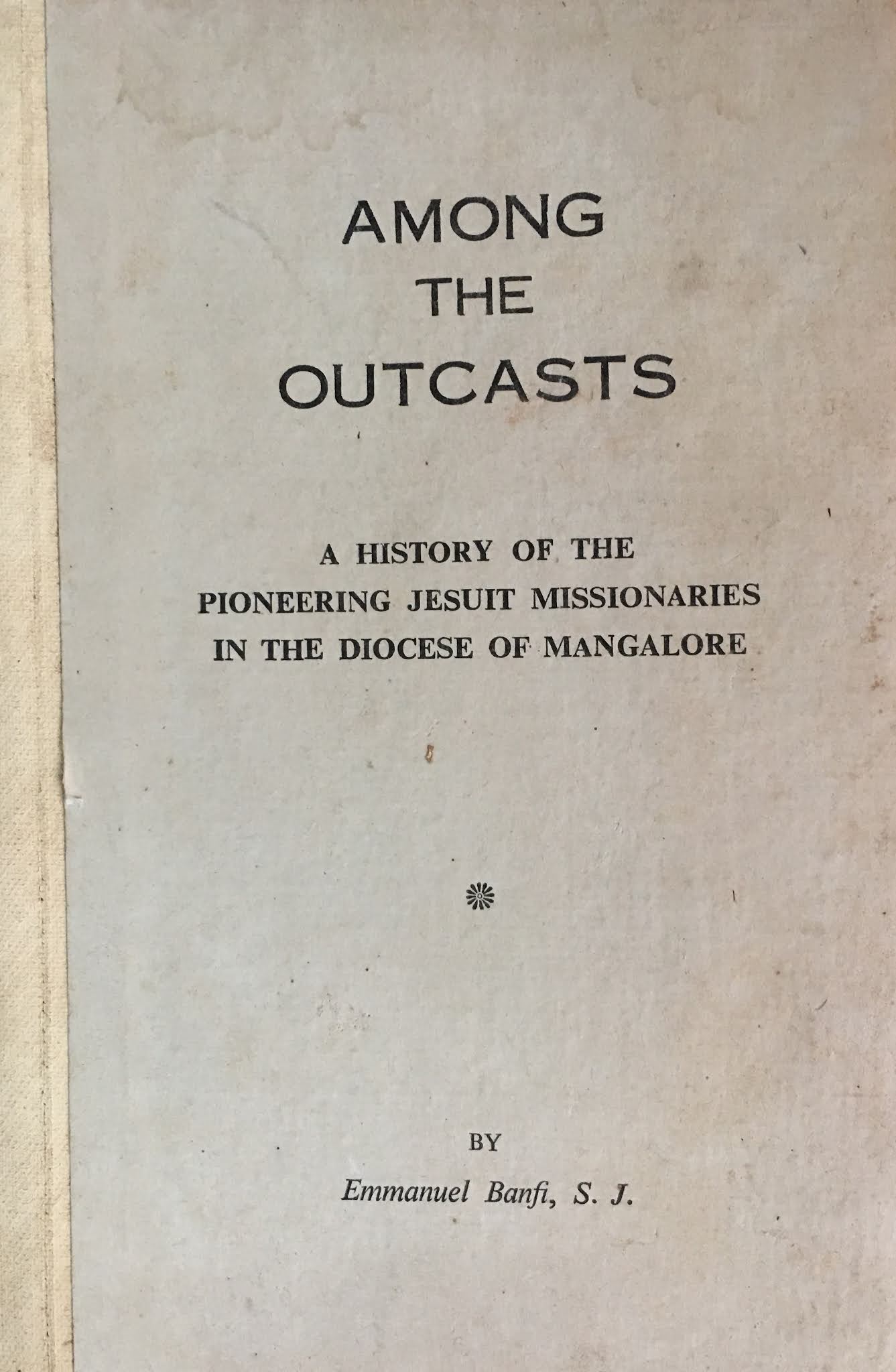
 Among the Outcasts by Fr Emmanuel Banfi, SJ

This book is a history of the pioneering Jesuit missionaries in the Diocese of Mangalore, i.e, Frs Angelo Maffei, Denis Coelho, Faustin Corti, Anthony Zearo, Paul Perini, Angelo Gavigraghi, and Alexander Camisa. Among the first Jesuits in Mangalore Jesuit Mission in the 19th Century they stand tall for their rigorous activity in the vineyard of the Lord. 

A brief history of evangelization in the Karnataka Jesuit Province. This book attempts to narrate the story of those Jesuits who left behind a great legacy in the North and South Karnataka.

Pray! Pray Much! - Prayer Services in Honour of the Servant of God Pedro Arrupe.
Authored by five Jesuits of the Karnataka Province. This short book contains 13 prayer services with varied themes connected with the life of Fr Arrupe. You may use this book in conducting the community prayer services as well as on other occasions.

 
 Jesuit Life and Mission Today

This volume contains the decrees and accompanying documents of the 31st – 35th General congregations of the Society of Jesus. They deal with the aspect of governance of the Society of Jesus at the global level.

Mogyan ya Hogyan? By Swami Supriya, SJ

These reflections on the Second Psalm of the Bible in Konkani vividly express the depth and breadth of the King David’s conversation with God. Truly useful not only for prayer but also for wide ranging discussions on life and its existence on this earth.

Yesu Sabha Gana Sakha by Swami Supriya, SJ 

A collection of 202 Christian devotional poems, first 51 composed by Swami Amalananda, SJ and the remaining 151 composed by Swami Supriya, SJ.

 Great Leader Moses in Kannada Pictorial, catechetical short book by Fr Swami Supriya (C.C.A Pai)  Personalities of the Bible in Kannada Pictorial, catechetical short book by Fr Swami Supriya (C.C.A Pai) 

Mangluru Misavancho Pratham Vir: Fr Angelo Maffei, SJ by Swami Supriya, SJ

A short biography of Jesuit Fr Angelo Maffei, one of the first Jesuit educationists in Mangalore. Being an Italian, he made Mangalore his second home and wrote in Kannada including grammar to Konkani and a Konkani dictionary. He is one of the finest Italian Jesuits whose contribution to Konkani language is immense and long lasting. 
Genesis – Personalities in Kannada Pictorial, catechetical short book by Fr Swami Supriya (C.C.A Pai) 

Akantantlo Asro by Swami Supriya, SJ
 
The in-depth reflections on the Third Psalm of the Bible in Konkani
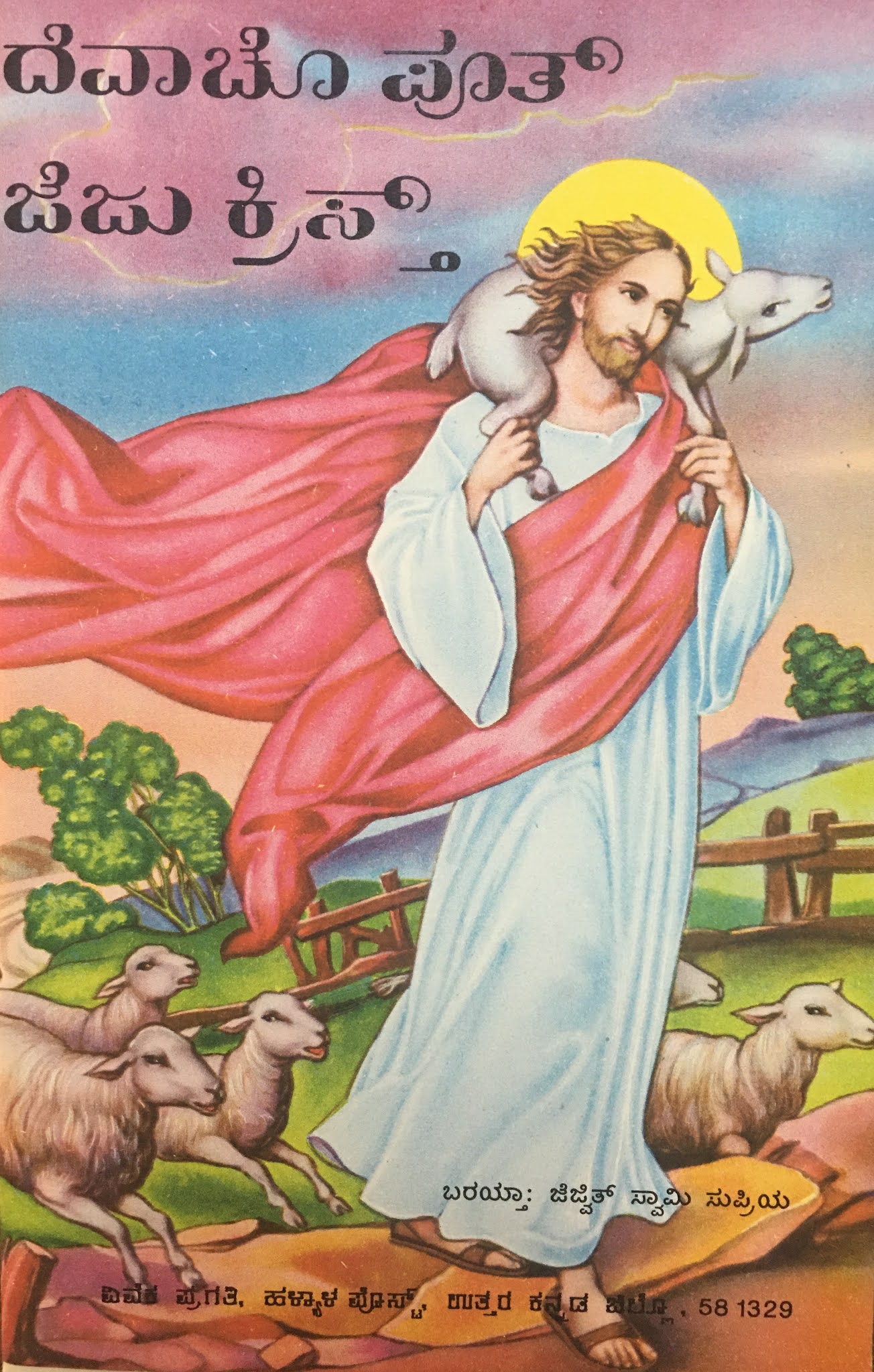
 Son of God, Jesus Christ in Kannada Pictorial, catechetical short book by Fr Swami Supriya (C.C.A Pai)

 Vira Virakta Santa Louis Gozanga by Fr Prashanth Madtha, SJ

A short biography in Kannada on Saint Aloysius Gonzaga written lucidly enumerating the achievement of this young Jesuit saint from Italy. A model for youth, Gonzaga served the plague victims while epidemic hit the city of Rome badly. Even though, plague brought him death, his service to the sick people brought glory to the heavens.

Yek Ghos Kanniyom by Swami Supriya, SJ 

First collection of seven short stories in Konkani

 Nentto tari Zantto Manay (Life of St Charles Borromeo in Konkani) by Swami Supriya, SJ

Lucidly written the biography of this great saint of Italy St Charles Borromeo presents us that no one is excluded from being a saint.

 Bagevanth Bakhita by Swami Supriya, SJ

A small booklet illustrates the life of Saint Josephine Bakhita, the Fortunate in Konkani. From a slave to a Saint, Bakhita’s life is awe inspiring in a world where evil and wickedness is rampant.

ಧರ್ಮಕಾಂಡ (Religious Poetry) by Fr Devadatta Kamath, SJ 
 ಜನಕನ ಮನದನ್ನ (Beloved of the Father) by Fr Devadatta Kamath, SJ

An epic in Kannada based on Christian Scripture. Composed on a particular meter, the author brings alive the history of salvation in the person of Jesus Christ with a robust rendering of the biblical accounts of life and death of Jesus.

 Silent Steps (profiles of our Jesuit brothers) by Fr Richard Sequeira, SJ

A very short a biographical account of 45 Jesuit brothers both living and dead who belonged to Karnataka Jesuit province but worked around the world with their simple, silent and yet inimitable style.

 Walk to Freedom by Fr Richard Sequeira, SJ

This book is a compilation of departed Jesuits who worked in the Karnataka Province from 1879 to 2019. They were good human beings, fervent religious and affectionate Jesuits. Even though they had humble origins it was the calling to follow Jesus that made a difference in their lives.

 Falling in Love will Decide Everything - in English.

Keeping in mind young children in our schools and in our care this 24 pages long book compiled by Anush D'Cunha, SJ takes a quick look at the life of Fr Pedro Arrupe with appropriate pictures and a short description. This colorful booklet is easy to read and get to know fascinating things on the incredibile personality of Fr Arrupe.

 Olave Baduku - in Kannada.


In order to spread the devotion to the Servant of God, Pedro Arrupe this book is a translation of Falling in Love will Decide Everything into Kannada. Keeping in mind the speakers of Kannada this book is a valuable source of information on Fr Arrupe to young students and adults as well. Written in simple language with colourful pictures, students and teachers in our schools will surely benefit a lot.

Dusro Ghos Kanniyom by Swami Supriya, SJ
 

A second collection of seven short stories in Konkani

 Anya Akoyi Ani Itor Kovanam by Swami Supriya, SJ

A collection of 20 poems in Konkani on various aspects of life.
 A Still Small Voice by Fr Dominic Ferroli, SJ

It is a profile of Jesuit pioneers in Karnataka. This book gives us a socio-cultural mosaic of Mysore of the missionary times and also the inception of Karnataka Church. Originally written in Italian titled i Saniassi Romani (The Roman Sanyasis) by the author, the English version provides interesting and fruitful reading not just for the Jesuits, but for any student of history and for all our Christian brethren.

 The Polite Preacher by Fr Sylvester Monteiro, SJ

This booklet gives ideas and thoughts on how to prepare a homily and how well to deliver it.


Noble Knight – Novenas to St Ignatius of Loyola by Fr Richard Sequeira, SJ

This book contains five sets of Novenas to the founder of Jesuits, St Ignatius of Loyola. They deal exclusively on Ignatius’s life, his virtues, Our Way of Proceeding, etc.
 A Prophecy that Became History by Fr Richard Sequeira, SJ

 36th General congregation of the SJ


This contains all the decrees and documents of 36th General Congregation which was held in Rome, Italy in 2016.

 The Jesuits in Malabar, Vol II by Fr Dominic Ferroli, SJ


This volume deals the Jesuits in the Malabar region from 1600 to 1800, that is until the suppression years of the Society of Jesus. A very carefully crafted history, Fr Ferroli’s two volumes are considered as the very important guides in understanding Indian Church history since the Reformation.

Contemplatives in Action (English)
It's a small book giving a short introduction to Jesuit life and its spirituality. 

Contemplatives in Action (Kannada)
 
It's a Kannada translation of the book Contemplatives in Action - a short introduction to Jesuit life and its spirituality. 
 Walking with Ignatius by Arturo Sosa, SJ

 Jesuit Schools - Living Tradition in the 21 Century

The complete list of books that are available.

1. ಹೊಸ ಒಡಂಬಡಿಕೆ ಗೆ ಪ್ರವೇಶ 
2. ಪ್ರಕಟಣಾ ಗ್ರಂಥ
3. Pathways to Peace
4. The Burning Bush, Vol. I
5. The Burning Bush, Vol. II
6. ಮಾತನಾಡುವ ಸಮಾಧಿಗಳು
7. Down the Memory Lane
8. Silent Steps (profiles of our Jesuit brothers)
9. Walk to Freedom 
10. A Still Small Voice 
11. A Prophecy that Became History 
12. ಜನಕನ ಮನದನ್ನ
13. ಧರ್ಮಕಂಡ
14. Noble Knight
15. Among the Outcasts
16. The Jesuits in Malabar
17. Jesuit life and mission today
18. 36th General congregation of the SJ
19. Spiritual Exercises of St Ignatius of Loyola (Kannada Translation) By A. Edwin D’Souza
20. Imitation of Christ of Thomas A Kempis (Kannada Translation)  By Prashanth Valerian Madtha, SJ
21. Son of God, Jesus Christ in Kannada Pictorial, catechetical short book by Fr Swami Supriya (C.C.A Pai)
22. Genesis – Personalities in Kannada Pictorial, catechetical short book by Fr Swami Supriya (C.C.A Pai)
23. Great Leader Moses in Kannada Pictorial, catechetical short book by Fr Swami Supriya (C.C.A Pai)
24. Personalities of the Bible in Kannada Pictorial, catechetical short book by Fr Swami Supriya (C.C.A Pai)
25. HARMONY: Inter-faith Prayer Services for Various Occasions. By Fr Ronnie Prabhu, SJ (Editor)
26. Contemplatives in Action (English)
27. Contemplatives in Action (Kannada)
28. Walking with Ignatius by Arturo Sosa, SJ
29. Jesuit Schools - Living Tradition in the 21 Century